



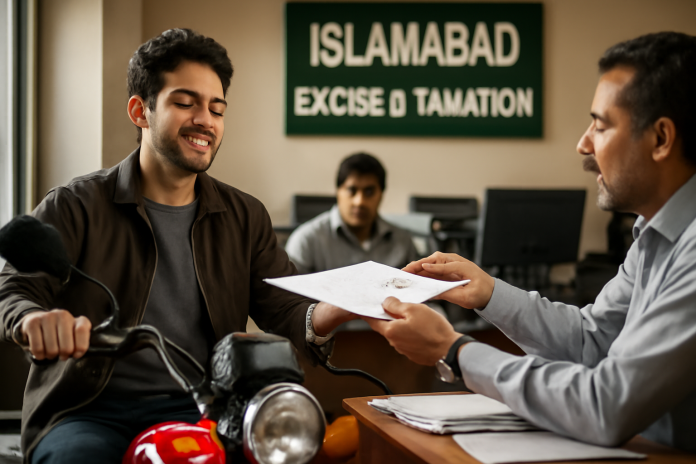

Islamabad’s One-Month Motorcycle Transfer Fee Waiver: What It Means for Riders
In a move aimed at giving immediate relief to everyday riders, the Islamabad Excise Department announced a one-month waiver of the motorcycle transfer fee. The decision, attributed to the department’s leadership, including Director General Irfan Memon, is designed to reduce administrative hurdles and help more motorbike owners access the government petrol subsidy. With fuel costs continuing to bite households across Pakistan, this practical step is receiving attention from riders who want to see real, on-the-ground benefits from policy changes.
This relief sits at the intersection of subsidy delivery and bureaucratic efficiency. By eliminating a common transfer cost, the government hopes to remove a barrier that often delays or complicates the process for those who need to transfer ownership to qualify for subsidy benefits tied to motorcycles. The move also signals the administration’s willingness to pair policy promises with concrete, accessible actions, a combination that can build trust among ordinary citizens who feel the pinch of rising fuel prices.
Why this policy matters right now
Fuel prices have remained volatile, and subsidies are a critical lifeline for many households. The subsidy schemes typically require beneficiaries to have qualifying motorcycle registrations and up-to-date ownership details. When transfer fees are required, some riders hesitate or delay, fearing extra costs on top of the already stretched monthly budget. By waiving the transfer fee for a limited time, the government creates a window of opportunity for more riders to participate fully in the subsidy program without additional financial strain.
For a country like Pakistan, where motorcycles are a common and practical mode of daily transport, the impact can be immediate and wide-ranging. Reduced transactional friction means more riders can qualify, claim, and benefit from the subsidy without getting bogged down in paperwork and small charges. In short, this is a policy that translates into tangible savings in the pockets of middle and lower-income riders who depend on motorcycles for commuting to work, school, and essential tasks.
Who benefits and how to make the most of it
The waiver is designed to help a broad cohort of riders, especially those who might have faced higher upfront costs when transferring ownership to align with subsidy eligibility. While the exact official guidelines will be published by the Excise Department, here is a practical snapshot of how riders can benefit and participate:
- New and existing bike owners who plan to transfer ownership within the month can save on transfer fees, making it easier to complete the required documentation for subsidy eligibility.
- Families and individuals who are buying a second-hand bike for subsistence or essential travel may find the transfer process simpler and more affordable during this window.
- Subsidy beneficiaries who previously faced delays due to administrative costs can now complete transfers with less financial burden.
- Riders who were unsure whether they qualified for the subsidy may be encouraged to review their ownership records and take concrete steps to join the program.
How to take full advantage of the waiver
Given that the waiver is time-bound, acting promptly can maximize benefits. Here is a concise, practical guide to navigating the process:
- Verify eligibility: Check the official subsidy scheme details released by the government and the Excise Department. Ensure your bike and ownership status meet the required criteria for subsidy eligibility.
- Gather essential documents: You will typically need a valid CNIC, the bike’s registration certificate (RC), the current ownership proof, and any transfer forms or sale-deed documents as required by the Excise Department. Keep copies ready for submission.
- Visit the nearest Excise office: Go to the federal capital’s Excise Department office or the branch handling motorcycle transfers. Inquire about any specific forms or online portals that may streamline the process during the waiver period.
- Submit and track your transfer: Complete the transfer application with the waiver in place and request a receipt or reference number. Track the status to ensure timely processing before the waiver window closes.
- Follow up on subsidy linkage: After transfer, confirm that your bike is linked to the subsidy program. Check with the subsidy authorities or the official portal for your subsidy status and disbursement timelines.
What this could mean for subsidy uptake and road safety
Beyond the immediate financial relief, a higher uptake of the subsidy could have broader positive implications. When more riders participate, the subsidy scheme achieves wider reach, which can stabilize fuel spending for households across cities and towns. Increased transparency and faster processing also set a precedent for streamlined procedures in other government services, potentially reducing long queues and friction in the future.
Another indirect benefit could be improved road safety and urban mobility. With simpler procedures, more riders may opt for properly registered and subsidized vehicles, ensuring better accountability and access to legitimate channels for repair, maintenance, and fuel discounts. As with any policy, the real measure will be in how smoothly the system works at the ground level and whether riders receive timely, accurate information about eligibility and benefits.
What readers should do now
If you are a bike owner in Islamabad or nearby areas, take this opportunity seriously but calmly. Prepare your documents, visit the Excise Department during working hours, and keep an eye on official announcements for any updates or extensions of the waiver. Even if you do not plan to transfer immediately, staying informed can help you plan ahead for subsidy eligibility and personal finances during periods of fuel price volatility.
Between now and the waiver’s end date, you can also use the time to review your ownership records, make sure your RC and CNIC details are current, and discuss with your family and local dealers about transfer timing. A small, proactive step now can save money later and ensure you don’t miss out on a policy that directly affects your monthly expenses.
Final thoughts
This one-month fee waiver in Islamabad is a pragmatic example of how government policy can translate into real-life savings for ordinary citizens. It acknowledges the daily challenges faced by riders who commute to work, school, and essential services. While the benefits will depend on how well the transfer process is implemented on the ground, the early signals are encouraging: a government-level acknowledgment that reducing friction in public services can deliver tangible relief to Pakistani families during tough times.
Keep an eye on official notices from the Excise Department, prepare your documents, and be ready to act within the waiver period. If implemented effectively, this policy could become a small but meaningful part of broader efforts to make government services more accessible and responsive to the needs of everyday Pakistanis.