



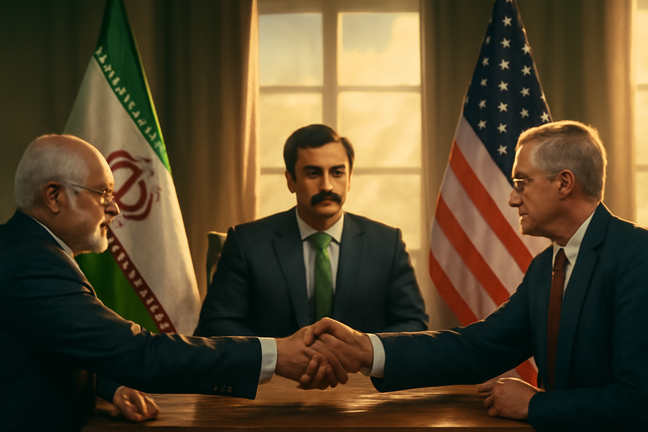

Pakistan’s Mediation in the US-Iran Ceasefire: A New Regional Role
Pakistan has long played the role of a bridge between big powers. A recent Al Jazeera feature shows that Islamabad was central in brokering a temporary US–Iran ceasefire in early 2026. The ceasefire pause, while not a final peace, was a major moment that could reshape how regional diplomacy is done in South Asia and beyond. For ordinary Pakistanis, this is more than headlines. It signals a potential shift in how Pakistan is seen on the world stage and what that could mean for security, trade, and stability at home.
What happened and why it mattered
The Al Jazeera piece describes a carefully staged process. After weeks of rising tensions, Pakistan helped bring the United States and Iran to a negotiated pause. Officials hinted that a broader deal could follow if talks stayed on track. A telling public signal came when news outlets reported that U.S. President Trump described the ceasefire as a result of conversations with Pakistan’s Prime Minister Shehbaz Sharif and Army Chief General Asim Munir. This framing placed Islamabad squarely at the center of the diplomacy, not just as a background host but as a decisive facilitator.
The article also highlights a multi-layered diplomatic effort. Pakistan reportedly invited both sides to Islamabad for broader discussions and coordinated with regional players such as Saudi Arabia, Turkiye, and Egypt. This creates a sense of a regional framework, not a one-off deal. China is also mentioned as a growing influence, with discussions around a five-point initiative covering a ceasefire, civilian protections, and safe shipping routes through the Strait of Hormuz. In practice, the ceasefire is described as a pause, not a permanent peace, but a crucial step that can reduce violence and create room for longer negotiations.
Why Pakistan stepped forward
There are several reasons why Pakistan took the lead. Geographically, Pakistan sits next to volatile fault lines in the Middle East, making stability in the region directly relevant to Pakistan’s own security and energy interests. Politically, Pakistan has developed deep ties with Tehran and Washington, giving it legitimacy as a mediator. Domestically, leaders in Islamabad have repeatedly framed diplomacy as a practical tool to protect citizens, reduce cross-border tensions, and protect the billions of dollars in trade and energy corridors that pass through the region. The Al Jazeera piece frames this as a deliberate strategy to position Pakistan as a trusted broker who can manage complex, multi-party talks.
For Pakistanis, the takeaway is clear: diplomacy here does not mean grand speeches, but quiet, sustained engagement that can prevent further bloodshed and create real economic opportunities. If Pakistan can help keep the talks going, more investment and jobs could follow, especially in sectors like energy and logistics that benefit from a stable regional order.
Regional dynamics and the bigger picture
The article points to a broader regional architecture forming around the ceasefire talks. The idea of a quadrilateral mechanism—Pakistan, Saudi Arabia, Turkiye, and Egypt—emerges as a framework to coordinate regional diplomacy. China’s involvement adds another layer, suggesting that a mix of regional leadership and international cooperation may be the new normal. For Pakistan, this is both an opportunity and a challenge: the country can leverage its role to cultivate stability and gains in trade, but it also takes on responsibility for keeping deals from slipping away as negotiations proceed.
Economically, calmer conditions at Hormuz and in the wider Gulf can lower energy risks and stabilize markets. For Pakistani businesses, students studying abroad, and families with relatives in the Gulf, that stability translates into practical benefits: cheaper travel, steadier remittances, and more predictable prices at home. The story also reinforces the idea that Pakistan can influence outcomes beyond its borders, a narrative that has political resonance at home and away.
What this means for Pakistanis at home
- Diplomacy with global powers could bring economic dividends. If talks progress, Pakistan might gain greater access to energy and trade corridors, reducing costs for consumers and industries.
- Security remains a priority. Any pause in hostilities reduces regional volatility, which helps local communities, farmers, and workers who depend on stable conditions for daily life.
- Education and technology ties may grow. A more stable region invites more international collaboration, scholarships, and technology partnerships that can benefit Pakistani students and startups.
- Public sentiment will hinge on tangible gains. People will watch for concrete steps like new investment, job creation, or infrastructure projects tied to regional peace efforts.
Looking ahead: what to watch for
The ceasefire is described as temporary. The real test will be whether talks evolve into a longer-lasting framework. The Al Jazeera report suggests that Islamabad will host and coordinate ongoing conversations, with regional partners playing critical roles. For Pakistanis, the next steps to watch include progress on security guarantees, civilian protections, and the reopening of strategic corridors. If a broader agreement develops, it could reshape trade routes, energy security, and regional alliances in ways that genuinely touch daily life here at home.
In the months ahead, the tone from Islamabad will matter. A practical, transparent approach that explains what is being sought, what is negotiable, and what remains unresolved will build trust with the public. Media coverage that cleanly separates verified information from speculation will also be essential to prevent misinformation and keep people informed about what changes, if any, will reach their doorstep.
Conclusion
The Al Jazeera feature paints a picture of Pakistan stepping into a new diplomatic light. By helping to broker a pause between the US and Iran, Islamabad asserts itself as a credible mediator capable of shaping regional security dynamics. For Pakistanis, this is not just international drama; it is a potential pathway to greater economic stability, safer borders, and more opportunities for our youth. The challenge now is to translate diplomatic gains into tangible, everyday benefits back home and to maintain a steady course as talks continue. If Pakistan can sustain its constructive role, the country may become a recognized hub for regional diplomacy—an outcome that could have lasting positive effects for generations to come.