




Introduction:
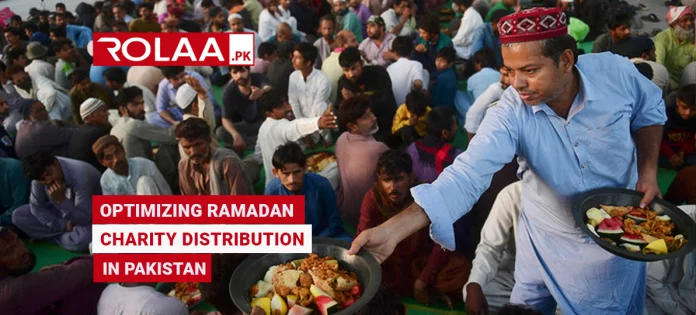
As the holy month of Ramadan approaches, the imperative of charity becomes paramount for Muslims worldwide, including in Pakistan. However, the effective distribution of Zakat (obligatory almsgiving) and food donations during this period encounters significant challenges, often resulting in inefficiencies and mismanagement. This article scrutinizes the obstacles encountered in charity distribution during Ramadan in Pakistan and proposes strategic solutions to optimize effectiveness and ensure equitable access for those in need.
Challenges in Charity Distribution:
- Infrastructure Deficiencies: Charitable organizations in Pakistan often contend with limited infrastructure and resources, hampering their ability to collect, store, and distribute donations efficiently.
- Geographic Disparities: Pakistan’s diverse topography and dispersed population pose logistical hurdles in reaching remote and marginalized communities, leading to disparities in aid distribution.
- Transparency Concerns: Certain charity organizations face scrutiny regarding the transparency and accountability of their distribution processes, raising apprehensions about potential financial mismanagement or diversion.
- Regulatory Complexities: Cumbersome regulatory requirements and bureaucratic procedures can impede the timely and effective distribution of charity, resulting in administrative burdens and delays.
- Coordination Challenges: Insufficient coordination among charitable entities, governmental bodies, and community stakeholders may lead to duplicative efforts or gaps in coverage, diminishing the impact of charitable initiatives.
Solutions and Mitigation Strategies:
- Infrastructure Enhancement: Investing in upgraded storage facilities, transportation networks, and distribution channels can augment the efficiency and scalability of charity distribution efforts.
- Technological Integration: Leveraging digital platforms and mobile applications for donation management and tracking can enhance transparency, accountability, and outreach in charity distribution operations.
- Community Empowerment: Engaging local communities in the planning and execution of charity initiatives fosters a sense of ownership, trust, and sustainability in distribution endeavors.
- Capacity Development: Providing targeted training and capacity-building support to charitable organizations and volunteers enhances their proficiency in needs assessment, resource management, and distribution best practices.
- Regulatory Reform: Simplifying regulatory processes and reducing bureaucratic barriers can facilitate smoother and expeditious charity distribution, enabling organizations to focus on serving communities effectively.
Conclusion:
Efficient charity distribution during Ramadan is paramount to ensure the equitable dissemination of Zakat and food donations to those in need across Pakistan. By addressing challenges such as infrastructure deficiencies, geographic disparities, transparency concerns, regulatory complexities, and coordination challenges through strategic solutions and mitigation strategies, charitable organizations can maximize their impact and uphold the principles of generosity and compassion epitomized during Ramadan. Collaborative efforts involving governmental bodies, civil society organizations and community stakeholders are indispensable in surmounting these challenges and fostering inclusive and equitable charity distribution practices in Pakistan.