




Introduction:
In the realm of adult education, the role of memory in facilitating effective learning cannot be overstated. Neuroeducation, a burgeoning field at the intersection of neuroscience and education, offers insights into how adults can optimize memory processes for enhanced learning outcomes. This article explores the importance of memory in adult learning and provides practical strategies grounded in neuroscience to improve memory retention and retrieval. Learning outcomes. This article explores the importance of memory in adult learning and provides practical strategies grounded in neuroscience to improve memory retention and retrieval.
The Significance of Memory in Adult Learning:
Memory serves as the cornerstone of adult learning, influencing the acquisition, retention, and application of knowledge and skills. Whether in formal educational settings or informal learning environments, adults rely on memory mechanisms to integrate new information with existing knowledge and experiences. Understanding the neural basis of memory formation and consolidation is essential for educators aiming to design effective learning interventions.
Neurobiological Foundations of Memory:
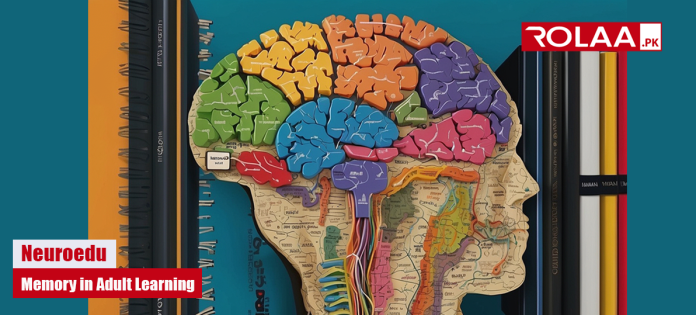
Neuroscience research has unveiled the intricate neural circuits and processes involved in memory formation. Key brain regions such as the hippocampus, amygdala, and prefrontal cortex play vital roles in encoding, consolidating, and retrieving memories. Moreover, the brain’s capacity for neuroplasticity underscores its ability to adapt and form new connections, even in adulthood.
Strategies to Enhance Memory in Adult Learning:
Active Engagement: Encourage active participation through interactive learning activities, discussions, and problem-solving tasks to stimulate multiple neural pathways involved in memory encoding.
Meaningful Contextualization: Relate new information to learners’ existing knowledge and experiences to establish connections and facilitate memory retrieval through associative links.
Spaced Repetition: Distribute learning sessions over time to optimize memory consolidation and prevent forgetting, reinforcing memory traces through periodic review.
Multimodal Learning: Utilize diverse sensory modalities such as visual, auditory, and kinesthetic stimuli to enhance memory encoding and retrieval.
Metacognitive Strategies: Foster metacognitive awareness by prompting learners to reflect on their learning process, set goals, monitor comprehension, and adjust learning strategies accordingly.
Conclusion:
By integrating insights from neuroeducation into adult learning practices, educators can create more effective and engaging learning experiences. Understanding the neurobiological underpinnings of memory enables educators to implement evidence-based strategies that promote deeper learning and long-term retention of information. Embracing a neuroeducational approach holds promise for enhancing adult learning outcomes and advancing the field of education as a whole.