



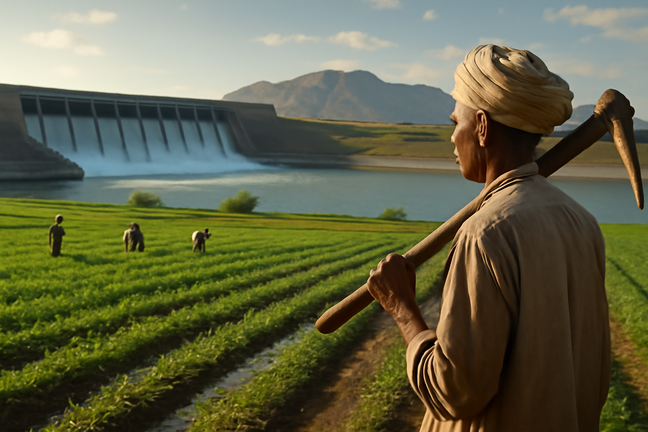

Pakistan’s Water Outlook: IRSA 15% Kharif Shortfall Explained
Pakistan’s water future hinges on the Indus river system, reservoir storage, and careful planning. Recently the IRSA Advisory Committee announced a 15 percent shortfall for Early Kharif 2026 and a 5 percent shortfall for Late Kharif, with provincial withdrawals capped at 67.451 million acre-feet. Inflows at Rim Station are expected to total 103.30 MAF for the season. This set of numbers signals tighter water availability for farmers and communities across Punjab, Sindh, Khyber Pakhtunkhwa, and Balochistan.
What the numbers mean
The Early Kharif shortfall means less water during the crucial April to June period when the cropping season begins. The Late Kharif shortfall adds pressure as the monsoon months continue into September for standing crops. The total conservative allocations come amid a year of mixed reservoir storage and limited water availability. Last year, total usage ran around 60.6 MAF, with a ten-year average of about 62.3 MAF. The plan aims to guard essential reserves while distributing irrigation fairly among provinces.
Storage, inflows, and Tarbela
Rabi 2025–26 inflows stood at 21.782 MAF with overall system storage around 2.307 MAF as of end-March. Tarbela Dam, a cornerstone of Pakistan’s water and power system, has seen live storage decline, prompting WAPDA to submit a mitigation plan for ongoing work on the T4 and T5 expansions. The T4 project is expected to be ready for functional testing after May 7, 2026, with wet testing around May 8. The revised operations will help manage release patterns during the Kharif period, but they also underline the fragility of supply when storage is tight.
Province wise allocations
Under the current framework, Punjab is allotted 33.357 MAF, Sindh 30.403 MAF, Khyber Pakhtunkhwa (CRBC) 0.823 MAF, and Balochistan 2.868 MAF. This distribution prioritizes major agricultural zones while acknowledging limited water availability. Local officials and farmers will watch inflows and reservoir levels closely as the season progresses, trying to avoid shortages that could hurt crops or trigger price spikes.
Implications for farmers and households
The water shortage will have direct consequences on sowing, irrigation scheduling, and crop choice. Farmers may shift to drought-tolerant varieties, adjust sowing dates, or rely more on efficient irrigation methods like drip and sprinkler systems where available. The shortage could also affect the cost of water and input prices, potentially adding to inflationary pressures for staple foods such as rice and cotton. For energy and industry, reduced water availability can influence hydropower generation, grid stability, and prices for electricity, which in turn affects households and small businesses.
What is being done and what to watch next
Officials stress conservative planning and continuous monitoring of reservoir levels and inflows. The Tarbela T4 and T5 project milestones are watch points for the season, with production and spillway management critical to maintaining system balance. The first week of May will include a formal review of Tarbela operations and potential adjustments to releases based on ongoing rainfall and storage data. The government will also need to coordinate with provincial authorities to manage irrigation allocations and minimize disruptions to farmers.
What Pakistanis can do now
At the household and farm level, there is value in water-saving habits. Farmers can adopt precision irrigation methods where feasible, improve canal and field drainage, and implement soil moisture monitoring. Urban residents can reduce water waste, fix leaks, and use rainwater harvesting where possible. Public awareness campaigns about water stewardship will support resilience as the season unfolds. While the numbers are technical, the bottom line is clear: acting smarter with water today helps secure food, price stability, and energy reliability for tomorrow.
Conclusion
Pakistan faces a tighter Kharif season, but informed planning and coordinated action can soften the impact. IRSA’s shortfall figures are a wake-up call for careful water management, investment in storage and irrigation efficiency, and stronger collaboration between federal and provincial authorities. As farmers, communities, and policy makers adjust to these realities, the goal remains the same: secure water for crops, households, and the economy without compromising the environment or future generations.